

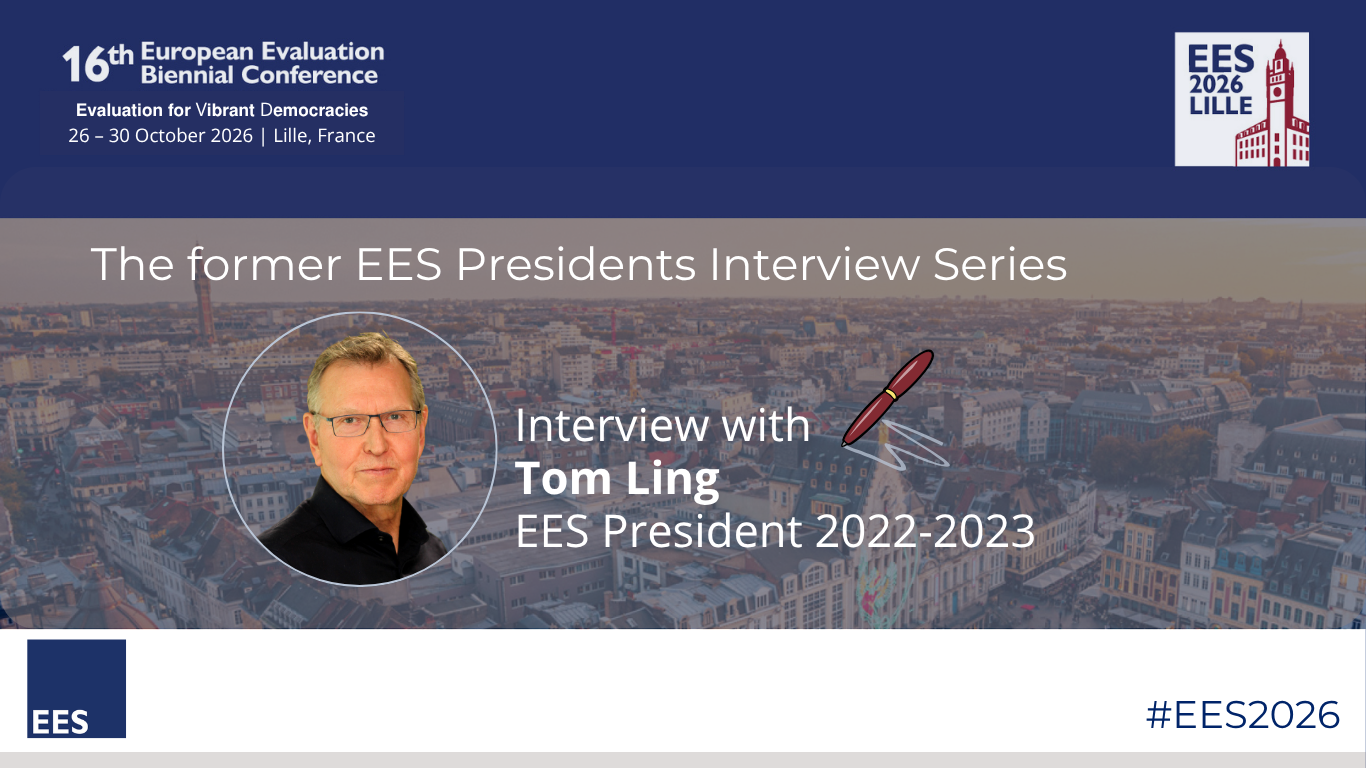
What are you currently working on?
My biggest preoccupation is with how to strengthen the use of evaluative evidence in decision-making. I am especially interested in the role of intermediaries in this and I’m working with a very interesting group in Uganda who have been doing this for over a decade now. I also see the EES as playing a greater role in this respect. In particular, I will continue to support the EES’s Evidence and Evaluation Forum (EEF) – led by the EES, which is helping take forward how evaluators see their role in relation to evidence informed policy making. Otherwise, I continue to work as a ‘jobbing evaluator’ delivering evaluations of complex interventions – including wellbeing in the NHS workforce and the training system in Northern Ireland.
When were you EES President, and what are the key changes in our field and their context?
The theme of the upcoming EES conference is ‘Evaluation for vibrant democracies’; what is your personal connection to this?
My route into evaluation came from my interest in democracy and the role of evidence-based public audit and this concern has endured. The use of evidence is a key pillar in democratic society (along with ensuring that all voices are heard and an orientation of disputes towards a sense of a shared public interest).
We live in turbulent times with much change, including technological change: what do you see as the biggest challenges and opportunities for evaluation?
We face two paradoxes. First, at a time where policy makers need more evidence to manage increasingly complex interventions, there is simultaneously a sense that the evidence produced through evaluations is not as helpful as it needs to be. There is an opportunity for some serious self-assessment in the evaluation community to ask ourselves if we have really stepped up to this plate. I believe, policy makers would welcome our engagement with this. Second, AI means that one function of evaluation – the production and synthesis of evidence – has been transformed in the face of an apparent abundance of AI generated ‘facts’. This has created an opportunity for evaluators is to transform this ‘infoglut’ into meaningful and carefully weighed, relevant evidence.
There is a Venn diagram in which these two challenges intersect which is about how we make hybrid intelligence – human and AI – work to arrive at speedy, ethical and inclusive judgements. This is an opportunity for evaluators to engage with AI engineers and other stakeholders to develop stronger methodological, ethical, and regulatory systems. There are further significant opportunities to, on the one hand, engage with policy makers and commissioners to support a vibrant knowledge eco-system to support evidence informed policy making, and on the other, drive forward how we use AI to support more efficient and effective evaluations. A key opportunity for this latter challenge is, I believe, to use AI to help support causal inference and to either engage with, or highlight the absence of, the least heard voices.
The EES will be at the heart of managing these challenges and maximizing our use of opportunities.
What should the priorities for the EES be in the coming years?
Engage with the knowledge eco-system within which European evaluation takes place (hence the EES Evidence and Evaluation Forum)
Finally: what ‘wise advice’ would you like to offer to young and emerging evaluators?
Be curious and know that people who deliver and receive services day after day will have accumulated deep wisdom.